4 Steps to Help a German Shepherd Settle After Walks
Last Updated: 2 November 2026
Quick Summary
To help a German Shepherd settle after walks, follow a fixed 15-minute routine: lead off with no fuss, offer water, a short toilet break on lead, straight to the rest spot, one chew or scatter feed, then sit down with no talking, eye contact or stroking. This predictable order teaches your German Shepherd settle time has begun.
Teach a settle cue by rewarding your dog for going to a mat, lying down and staying calm.
Keep the post-walk order identical every time: cooldown, chew time on the mat, an hour of quiet time, then rest.
Reduce home stimulation by putting toys away, blocking the street view and setting up a quiet area away from door traffic.
Walk at quieter times such as early morning or late evening, and avoid the school run, bin day and the local dog park.
Give ten minutes of loose-lead sniffing on a long line in a quiet spot to help bring arousal down.
Table of Contents
Why Your German Shepherd Is Still Restless After a Walk
A German Shepherd settle problem usually starts before you get home: walks spike arousal, and a dog that has spent an hour scanning and reacting does not switch off when the lead comes off. If that sounds familiar, this guide to stopping German Shepherd lunging at dogs sets out a step-by-step plan for lead reactivity.
How to Calm a Dog After a Walk: The First 15 Minutes
The first 15 minutes home decide the next three hours: lead off with no fuss, water, a short toilet break on lead, straight to the rest spot, one chew or scatter feed, then sit down with no talking, eye contact or stroking.
The first 15 minutes home follow a fixed order that tells your German Shepherd the walk is over. If your dog stays wound up after walks, learn how to help dogs become neutral in challenging situations through threshold work and desensitisation. Calmer settling often starts with calmer walking, so see our loose lead walking for reactive German Shepherds guide.
Step | What to do |
Lead off | Remove the lead with no fuss |
Water | Offer water |
Toilet break | Short toilet break on lead |
Rest spot | Straight to the rest spot |
Settle aid | One chew or scatter feed |
Wind-down | Sit down with no talking, eye contact or stroking |
German Shepherd Settle Training on a Mat or Bed
A settle cue is a trained behaviour, not a mood: you teach your German Shepherd to go to a mat, bed or blanket and stay until released.

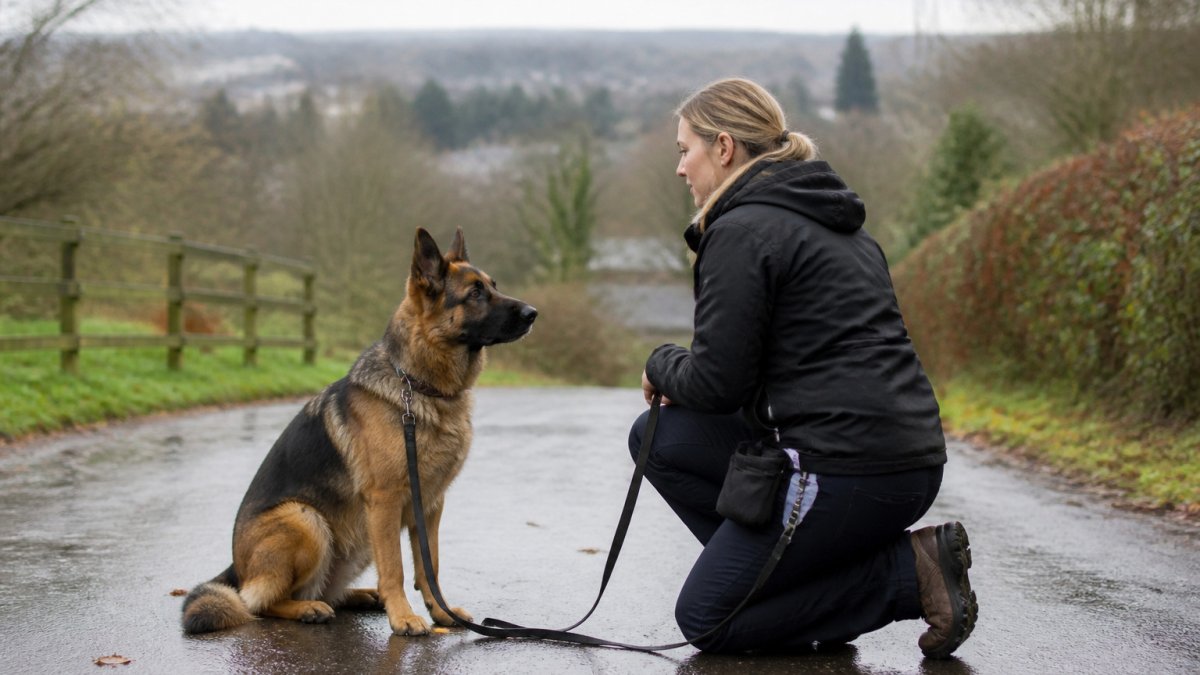
Pick a quiet corner away from the door and window, toss a treat onto the mat and reward stepping on, then lying down, then calm at one second, three, then five.
If your German Shepherd is overstimulated after walks and you want hands-on help, you can contact White Wolf Dog Training about one-to-one support built around your dog's history. You can also book your free, no-obligation 1:1 assessment.
Building a Predictable Post-Walk Routine
Dogs relax faster when they know what comes next, so keep the order identical: cooldown (lead off, water, toilet, mat), chew time on the mat, an hour of quiet time, then rest.
Reducing Stimulation in the Home
You cannot train a dog out of an environment that keeps winding it up: put toys away and bring one out for play, block the street view or move the rest spot, and set up a quiet area away from door traffic.
Choosing Quieter Walking Routes and Times
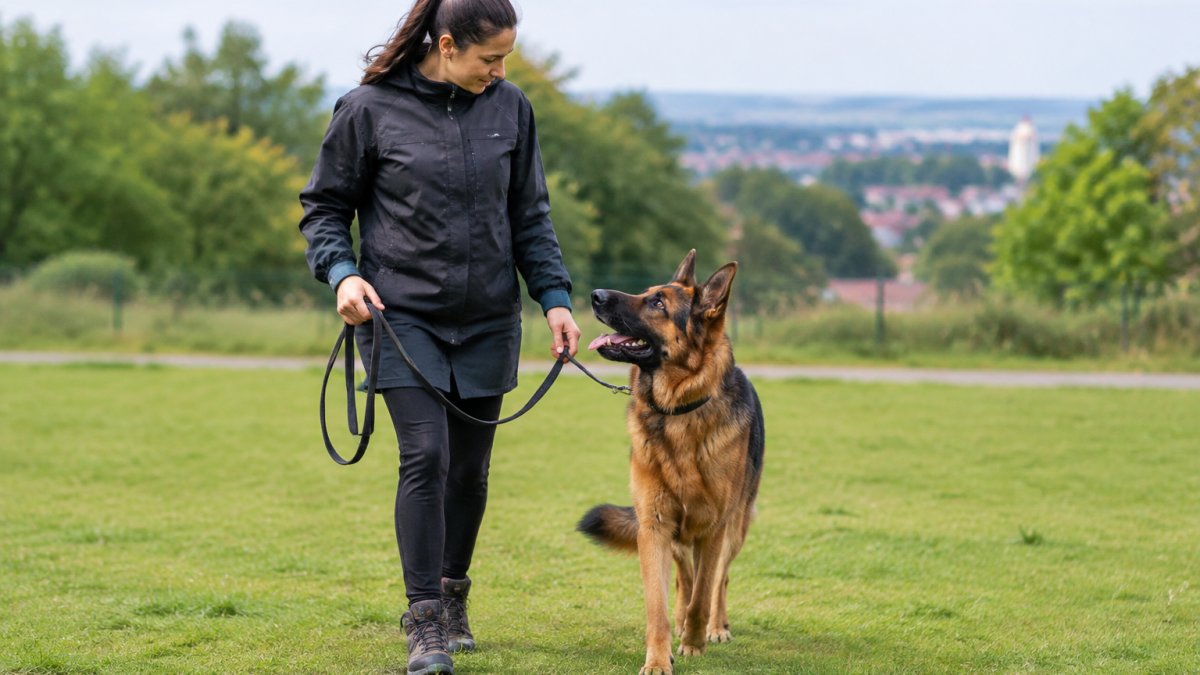
Walk at quieter times such as early morning or late evening, choose routes with space to step aside, avoid the school run, bin day and the local dog park if your dog reacts, and vary the route so your dog is not predicting triggers at every corner.
Using Sniffing and Decompression on Walks
Sniffing is how dogs process the world and bring arousal down. Give ten minutes of loose-lead sniffing on a long line in a quiet spot with no training cues, then finish with a slow walk home.
German Shepherd Exercise Needs and Walk Intensity
Too much exercise is as much a problem as too little: a German Shepherd getting two hours of daily high-intensity ball throwing is being trained to be fit and wired. Brain work tires a German Shepherd faster than distance, so ten minutes of scent games often does more than an extra mile.
Distinguishing Normal Excitement From Pain, Heat Stress or Anxiety
Not every restless dog is overexcited. Pain shows as stiffness, reluctance to climb stairs or changes in gait; heat stress as heavy panting that does not settle, drooling or glazed eyes; anxiety as pacing, drooling or destructive behaviour. If any appear, speak to your vet first.
Measuring Progress and Knowing When to Seek Help
Measure how long it takes to settle after a walk, how many walks a week end calmly, and how often your dog chooses the mat unasked.
If your German Shepherd is still pacing long after the lead comes off, you are not failing. You are missing a plan.
White Wolf Dog Training offers one-to-one support built around reactive German Shepherds, with a relationship-based approach that helps you read your dog's body language and build real impulse control.
Get started with White Wolf Dog Training and book your free, no-obligation 1:1 assessment.
Frequently Asked Questions
How do I calm down my German Shepherd after a walk?
Keep the first 15 minutes predictable and low-key. Come home, remove the lead calmly, offer water, and give your dog a quiet space to decompress rather than starting a play session or talking excitedly. A short sniffing or chewing activity can help, as long as it lowers arousal rather than raising it. Practise a settle cue on a mat so your German Shepherd learns what to do after exercise, and keep greetings calm. If restlessness persists despite a consistent routine, seek advice from a qualified trainer or your vet.
Why is my German Shepherd still restless after a walk?
Restlessness after a walk can come from overstimulation, an overly intense route, or simply not having learned how to switch off. Some German Shepherds remain alert because the walk was full of triggers, while others need a clearer cooldown routine. It is also worth ruling out pain, heat stress or anxiety, especially if the behaviour is new. A structured post-walk routine, quieter routes and settle training usually help.
Can too much exercise make a German Shepherd more excitable?
Yes. More exercise does not always mean a calmer dog. For some German Shepherds, long or highly stimulating walks build fitness and arousal rather than reducing it, so they come home wired and unable to settle. Matching exercise to your dog's age, fitness and temperament matters, and so does including sniffing, brain work and calm rest periods. If your German Shepherd seems more hyper after longer walks, try shorter, calmer routes with more sniffing and a consistent settle routine at home.
Comments