Choosing a Loose Lead Walking Trainer in Berkshire
Last Updated: 5 November 2026
Quick Summary
A loose lead walking trainer in Berkshire teaches you to stop moving when the lead tightens, reward every check-in and change direction before your dog reacts. Start training the lead indoors first, keep sessions to ten focused minutes, and build calm habits before tackling busy pavements.
Stop moving when the lead tightens and wait for it to slacken before walking on.
Mark and reward every glance back at you during the walk.
Change direction while your dog is still calm, before the trigger arrives.
Ten focused minutes of practice beats an hour of managed chaos.
Train the lead indoors first, as a hallway is kinder than a busy pavement.
Table of Contents
How to Stop a Dog Pulling on the Lead: A Practical Starting Point
A loose lead walking trainer in Berkshire will tell you the pulling is rarely defiance, it is a dog who has never been taught what the lead means.
Most owners try to fix pulling once the dog is already lunging. The useful window is earlier: the moment your dog notices something and decides about it.
Stop moving when the lead tightens. No yanking, the walk pauses until the lead slackens.
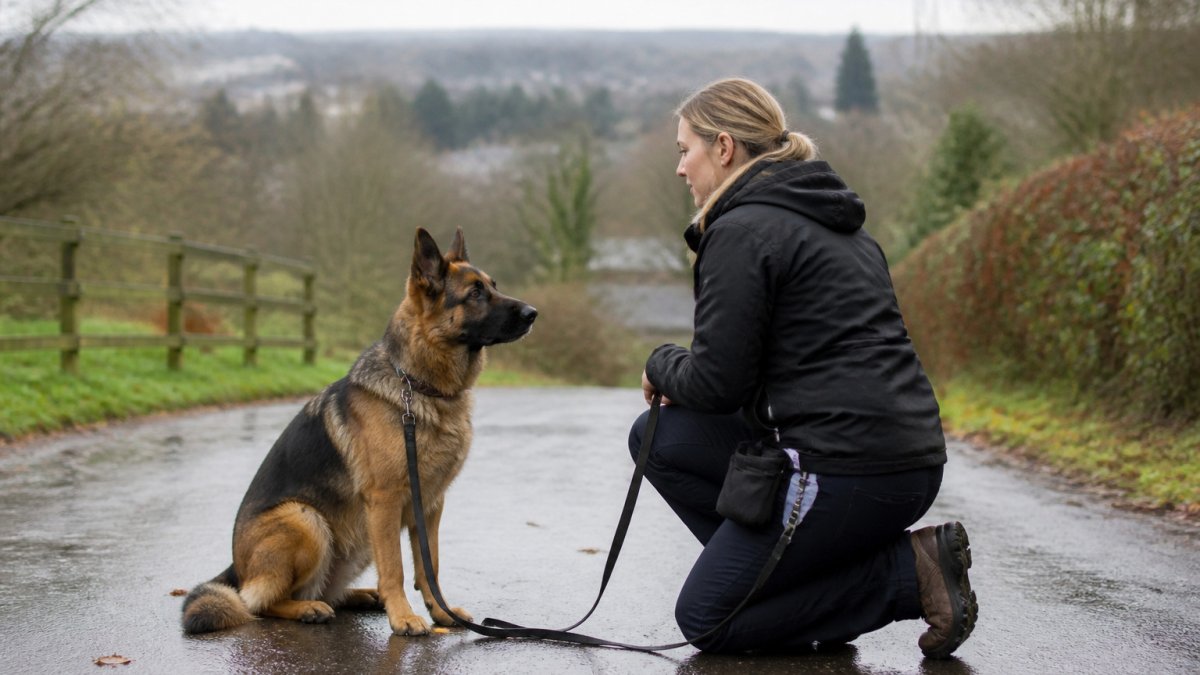
Reward the check-in. Mark and reward every glance back at you.
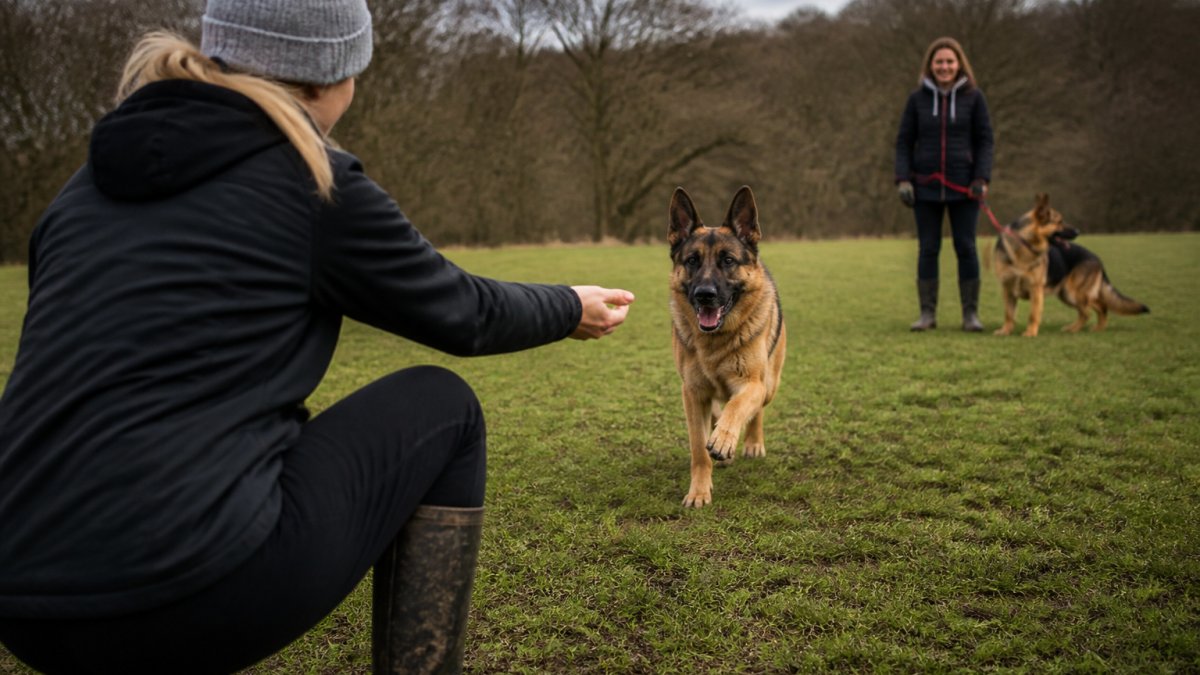
Change direction before the trigger. Turn away while your dog is still calm.
Keep sessions short. Ten focused minutes beats an hour of managed chaos.
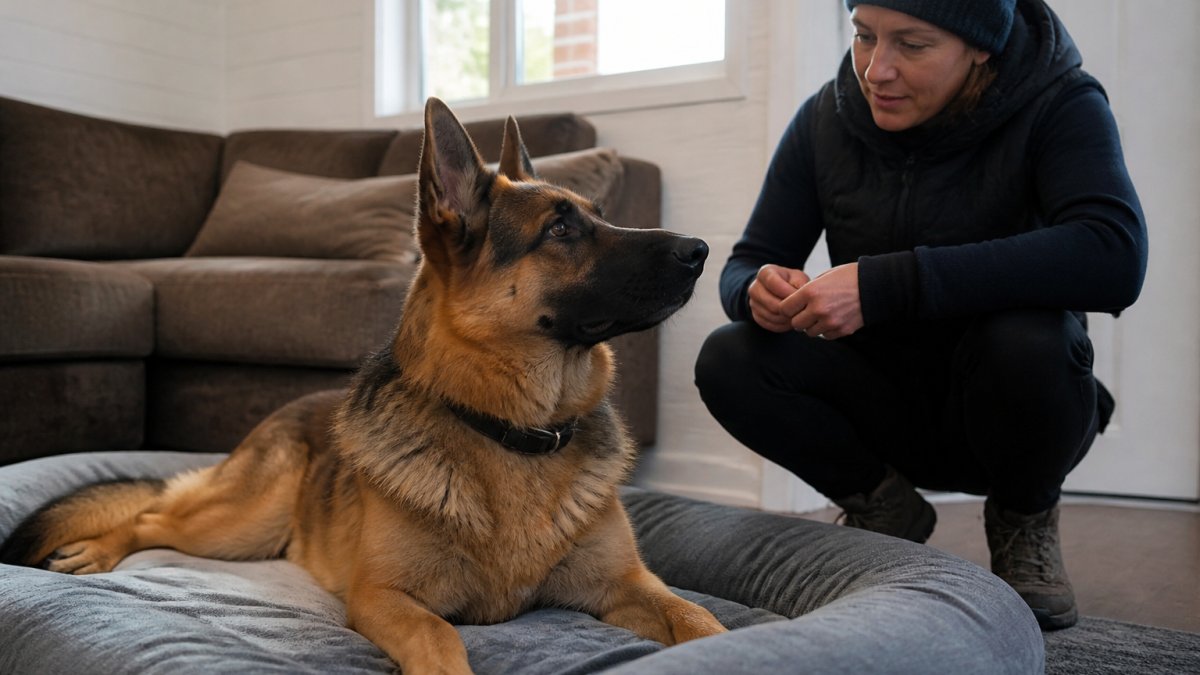
Train the lead indoors first. A hallway is kinder than a busy pavement.
A common mistake is practising only on the walk itself. If your dog has never been rewarded for walking calmly, the street is the worst place to start.
For a fuller step-by-step method, read our guide to loose lead walking for reactive German Shepherds.
The article sets out a handful of practical habits that do most of the work when teaching a dog to walk on a loose lead.
Action | What to do |
Lead tightens | Stop moving; no yanking, walk pauses until lead slackens |
Dog checks in | Mark and reward every glance back at you |
Trigger ahead | Change direction while your dog is still calm |
Session length | Keep short; ten focused minutes beats an hour |
Where to start | Train the lead indoors first, such as a hallway |
Why a Reactive Dog Trainer in Reading Takes a Different Approach
Reactivity is not disobedience. It is a dog whose nervous system has learned that other dogs, traffic or strangers are a threat, and the lunging is the outward sign of that internal state.

A relationship-based approach looks at the dog's history, the triggers, the distance at which they can still think, and your daily life, then builds from there, at the dog's pace.
Your body language matters as much as the dog's. A tight lead, a held breath and a braced stance all travel down the lead. Reading your dog's early signals, the stiffening, the stare, the weight shift, lets you redirect before the outburst.
If your dog reacts to other dogs and you want support tailored to them, you can arrange bespoke reactive dog training in Reading with us.
What One-to-One Dog Training in Berkshire Should Include
Individual sessions should be built around your dog, not a fixed curriculum. A good programme starts with a proper history: breed, age, triggers, what has already been tried, and what you want daily life to look like.
A clear assessment of the behaviour and its triggers
Owner coaching, so you can read and redirect your dog's body language
Realistic goals set at your dog's pace
Practice in the environments you actually walk in
Honest progress reviews, including what is and is not improving
Watch out: a trainer who promises a fixed timeline or guaranteed result before meeting your dog is guessing. Behaviour change depends on the dog, the history and the consistency of practice.
If you are weighing up the commitment, our breakdown of what one-to-one dog training costs explains the factors that affect it before you book. When you are ready, you can request a free one-to-one consultation.
Frequently Asked Questions
How do I find a good loose lead walking trainer?
Look for a trainer who uses reward-based methods and can explain their approach clearly. Ask about their experience with your breed, especially if you have a German Shepherd or reactive dog. Check they offer one-to-one sessions so the training is tailored to your dog, and confirm they cover your area, such as Reading, Wokingham or Bracknell. A free initial assessment lets you see how they handle your dog before committing.
How many sessions does it take to teach a dog to walk on a loose lead?
There is no fixed number. It depends on your dog's age, history and how reactive they are, plus how consistently you practise between sessions. Some owners see clear improvement within a few weeks of regular one-to-one training, while dogs with a long history of lead pulling may need months of steady work. A good trainer will set realistic milestones and review progress with you rather than promise a set timeframe.
What should I do when my dog pulls towards other dogs?
Increase distance from the other dog before your dog reacts, then reward calm behaviour. Practise this in low-distraction settings first, such as quiet streets in Woodley or Bracknell, before trying busier routes. A reactive dog trainer can show you how to read your dog's body language and redirect them before they lunge. One-to-one training in Berkshire is often the quickest way to build this skill safely.
Reactivity and pulling are not permanent features of your dog. They are patterns that can be changed with the right guidance and steady practice. White Wolf Dog Training offers one-to-one sessions built around your dog's history, focused on reading body language, building impulse control and helping your German Shepherd stay neutral around other dogs. Get started with White Wolf Dog Training and take the first calm walk together.
Comments