Can Dog Training Help With Rehoming Worries?
Last Updated: November 1, 2026
Quick Summary
Dog training can help owners cope with rehoming worries by targeting the behaviour behind them, such as reactivity, which can be worked on with a calm routine and a structured plan. Progress is usually slow and uneven, so gradual steps suit a worried dog better than rushing. Specialist one-to-one support is available in Reading and surrounding areas if progress stalls.
Reactivity is a behaviour, and with the right plan it can be worked on.
Keep a simple daily routine for meals, walks and rest.
Give your dog a quiet space it can retreat to.
Use reward-based training for basic cues.
Expect progress to be slow and uneven, with setbacks along the way.
Table of Contents
Why Rehoming Worries Feel So Overwhelming
If your German Shepherd lunges at other dogs or barks at every passer-by, you may already be questioning whether you can keep going. That feeling is real, and it does not make you a bad owner.
At White Wolf Dog Training, we work with Reading and Berkshire owners who feel exactly this way. Reactivity is a behaviour, and with the right plan it can be worked on.
How to Settle a Rescue Dog Without Making Things Worse
Settling a rescue dog takes time (How to Adopt a Rescue Dog or Puppy - RSPCA). Start with a calm, predictable home where your dog knows what to expect each day.

Introducing new walks or visitors gradually tends to suit a worried dog better than rushing. Our guide on building trust with loose-lead walking and recall shows how these steps help form a lasting bond.
Keep a simple daily routine for meals, walks and rest
Give your dog a quiet space it can retreat to (Creating a Good Home For Your Dog - RSPCA)
Use reward-based training for basic cues (How to Train Your Dog & Top Training Tips - RSPCA)
Expect progress to be slow and uneven, and read our reactive dog training results timeline explained to see how long progress usually takes and how to handle setbacks realistically.
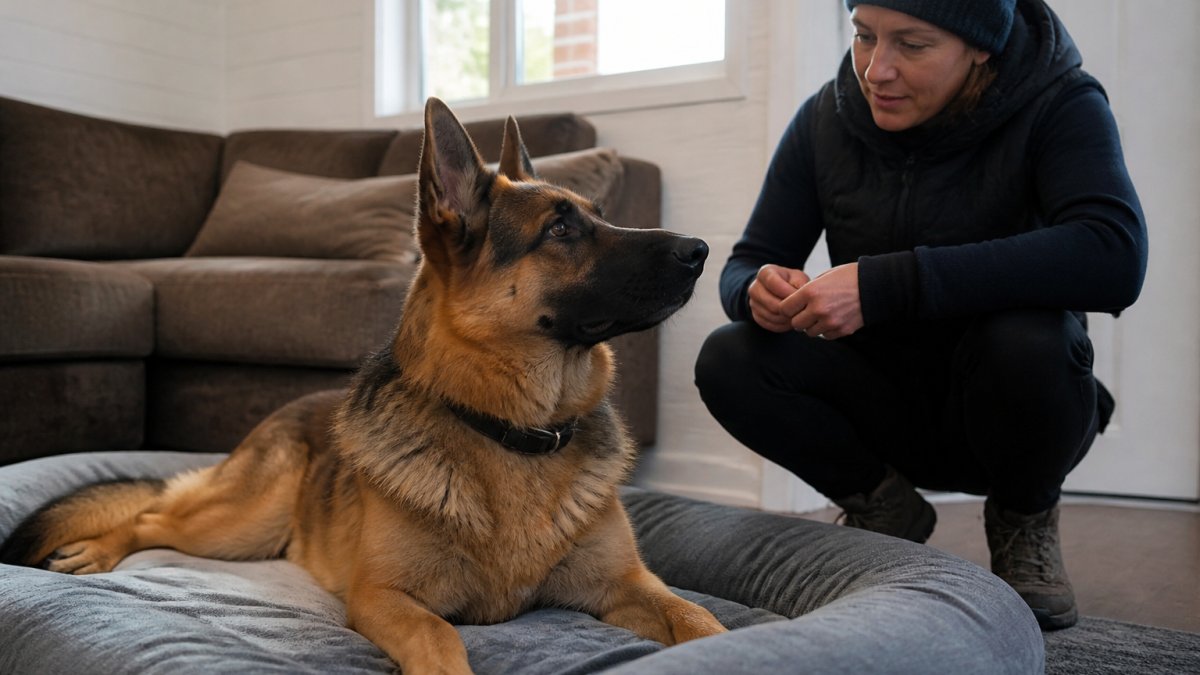
!A calm German Shepherd resting on a bed in a quiet living room while its owner sits nearby reading
Getting Specialist Help for Reactive Dogs in Reading
If progress stalls, specialist help can make a real difference. One-to-one training focuses on your dog, your routine and the triggers that matter most to you. Book a free, no-obligation consultation to talk through your dog's behaviour, or contact us to request a one-to-one consultation in Reading or surrounding areas.
Frequently Asked Questions
Can dog training help if I'm thinking about rehoming my dog?
Often, yes. Many owners considering rehoming are dealing with reactivity such as lunging or barking that feels impossible to manage on walks. A structured, one-to-one training plan can help you work out practical steps for managing triggers and building calmer habits. White Wolf Dog Training works with owners in Reading and Berkshire to assess the situation first, so you can see what is realistically achievable before making any decisions about your dog's future.
How long does it take a rescue dog to settle into a new home?
Settling-in periods vary widely from dog to dog, and there is no fixed timeline. Some dogs adjust within a few weeks, while others take several months to feel fully confident. Consistent routines, calm handling and clear boundaries help speed up the process. Progress is rarely a straight line, so it helps to measure improvement over weeks rather than days.
When should I ask a professional dog trainer for help?
Get support early if your dog's behaviour is affecting your daily life, your family's wellbeing, or your ability to walk your dog safely. Signs that professional help may be needed include persistent lunging or barking, avoidance of walks, or feeling unable to cope. A qualified trainer can assess the cause of the behaviour and build a plan around your specific situation. Contact White Wolf Dog Training to arrange a free, no-obligation one-to-one assessment.
Comments